
Every time the air conditioner kicks on, the breaker goes and takes half the room with it, so Chris gives that appliance a line of its own.
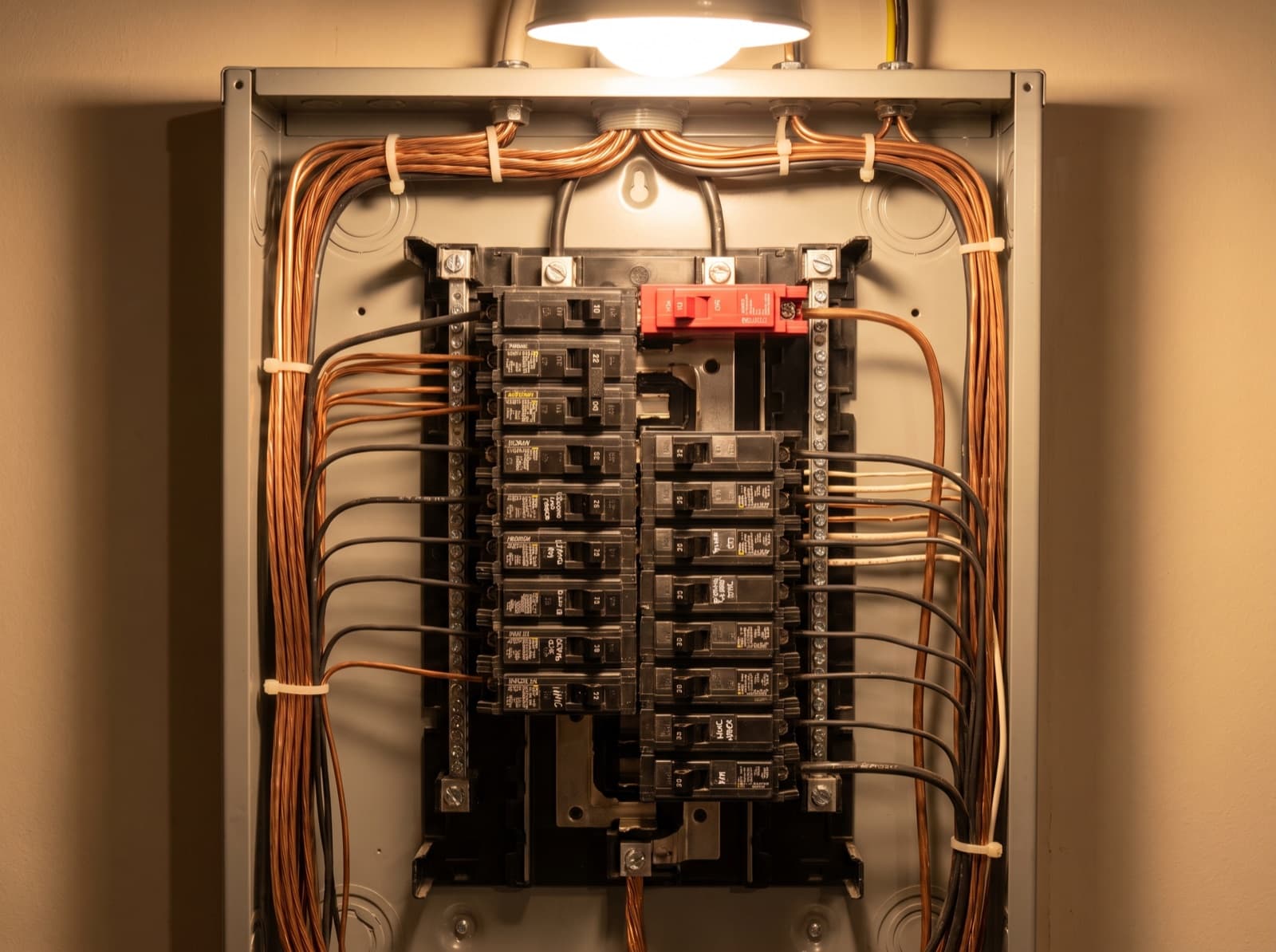
A dedicated circuit is one breaker, one run of wire and one appliance on the end of it, with nothing else sharing the line. It is the fix when an appliance and the outlets around it are asking one circuit for more than it was run to carry, and it is why a microwave, a window air conditioner or a freezer stops taking the lights down with it. Before anything is run, Chris checks that the panel has a space for the new breaker and the service has room for the load, and if it does not, he tells you that before he gives you a price.
- One appliance, one breaker, one line
- Free estimate, price agreed before work starts
- Licensed and insured, NJ #19320
The panel gets checked for room before the new line is run.
He finds what else is on that circuit
The breaker that trips is protecting everything on its circuit, not only the appliance you noticed, so the first job is finding what else shares it. That decides whether the answer is a new line or moving one thing off the old one.
The panel has to have room
A new circuit needs a free space in the panel and a service that can carry the extra load. If the panel is full or the service is the limit, that is the panel conversation, and you hear it before the price rather than after.
The permit is the lighter kind
New Jersey classes new electrical work for an air conditioner, a clothes dryer, or a range or oven in a one or two family house as minor work. The town gets notice before work begins, and the permit application follows within five business days.
The price is agreed before the work
Estimates are free, and you know the number before the new breaker goes in.
Before the new line goes in.
Every question here is one somebody actually asked on a forum or an inspection site, and each answer links to where it was asked.
Why does my microwave keep tripping the breaker?
Usually because it is not alone on that circuit. A microwave and a toaster oven running together on one kitchen circuit can ask it for more than it carries, and the breaker is doing its job when it trips. The fix is splitting those loads, usually with a dedicated circuit for the microwave, and never a bigger breaker on the same wire.
The original thread on DIY ChatroomMy two air conditioners are on the same circuit and the breaker keeps tripping.
An air conditioner pulls hardest in the moment it starts, so two on one circuit, or one sharing a circuit with a bedroom full of outlets, trips the breaker when they cycle on together. The breaker is right to trip. Each unit on its own line is what ends it, rather than a bigger breaker on the same wire.
The original question on RedditWill a 20 amp circuit handle two space heaters?
No. Two fifteen hundred watt heaters together draw about twenty five amps, which is more than a twenty amp circuit is built to carry, so the breaker tripping is the right outcome rather than a fault. Two heaters that both have to run means two circuits, one each.
The original question on RedditDo I need a permit to add a circuit, or is it ordinary maintenance?
Adding one is not ordinary maintenance. New Jersey's rule classes new electrical work incidental to installing an air conditioner, a clothes dryer, or a range or oven in a one or two family house as minor work, along with up to five new outlets where the existing circuits and panel space can carry them. Minor work still needs a permit, but the work can start once the town has notice, and the application follows within five business days. Swapping an outlet or a switch for a like one is the ordinary maintenance end.
The New Jersey rule