
Most generator quotes start with the unit, so Chris starts with what the house has to keep running and sizes from there.
A generator is bought for the night the street goes dark, so the first question is what has to stay on: the heat, the fridge, the well or sump pump, a medical device, some lights. That list and what the house draws set the size. The size decides whether it runs the whole house or a chosen set of circuits. The connection is where the danger is. A cord back fed through an outlet sends power out to the street and can kill a line worker. So he connects one two ways only, a listed transfer switch or a listed interlock on the panel, and both are permitted work.
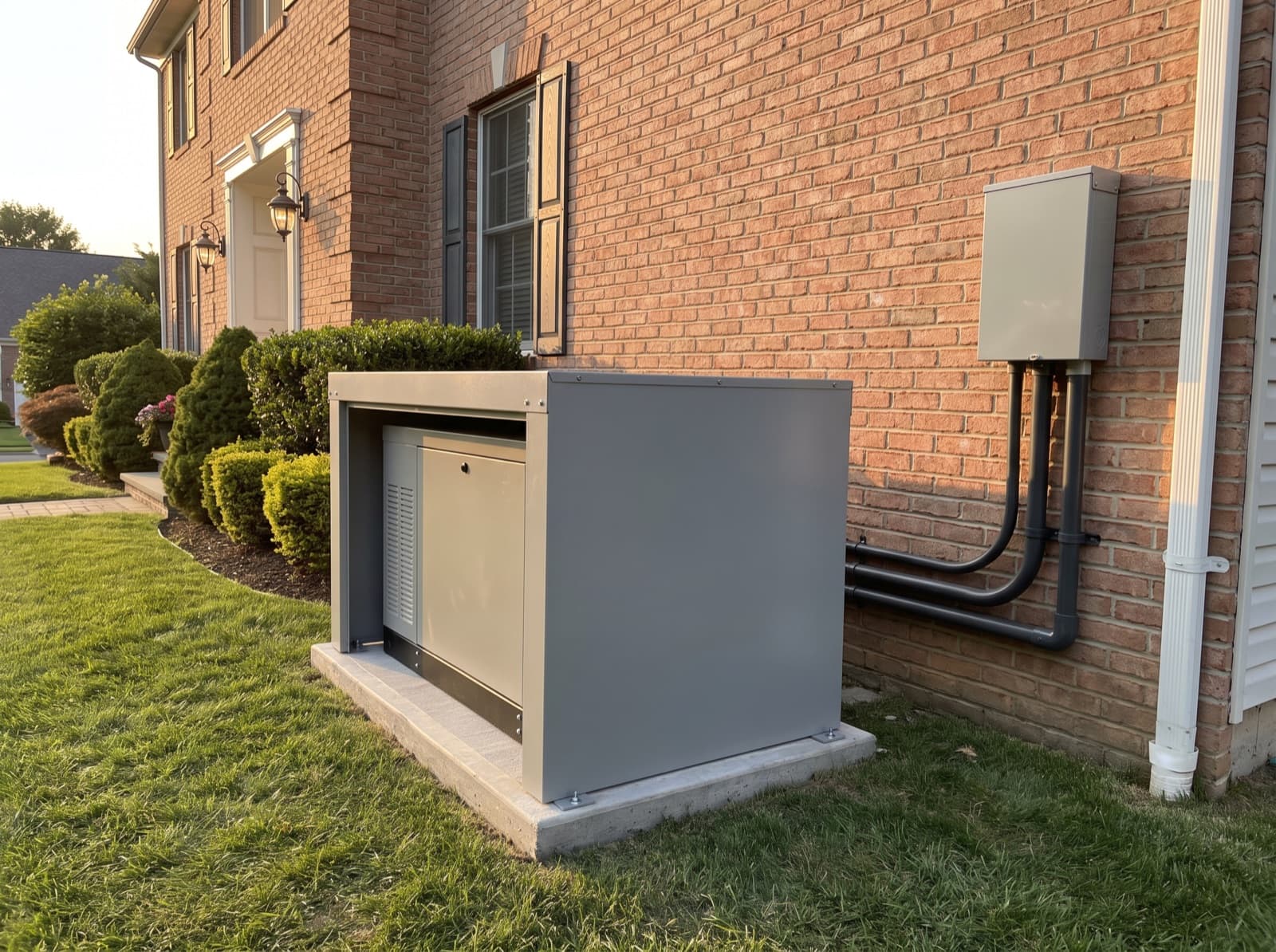
- A transfer switch or an interlock, never a back feed cord
- Free estimate, price agreed before work starts
- Licensed and insured, NJ #19320
The house gets sized before the generator gets bought.
What has to stay on gets written down first
Heat, the fridge, a sump or well pump, anything medical, and the lights you would want. That list plus what the house draws sets the size. The size is the difference between running the whole panel and running a chosen set of circuits.
The connection is a transfer switch or an interlock
A standby unit gets an automatic transfer switch so it takes over on its own. A portable one gets an interlock kit or a manual switch on the panel and an inlet on the outside wall, so the cord never goes near an outlet.
The permit is usually two trades
The electrical side is the switch, the connection and any panel change. A standby unit on gas needs a gas line permit as well, and the township can have rules on where the unit sits. Your construction office answers this before anything is ordered.
The price is agreed before the work
Estimates are free, and you know the number before the pad is poured or the panel is opened.
Before the generator is ordered.
Every question here is one somebody actually asked on a forum or an inspection site, and each answer links to where it was asked.
Does a standby generator run the whole house, or only some of it?
Either, and that is the decision rather than a detail. A whole house setup carries the panel; an essential circuits setup carries a chosen list, usually the heat, the fridge, the well or sump pump and some lighting. What decides it is the size of the generator and what the house actually draws, not what anybody would prefer, so it gets sized before it gets sold.
The original question on RedditIs a whole house generator worth it in South Jersey?
Judge it on what actually happens here rather than on a peace of mind line. In February 2026 more than 130,000 Atlantic City Electric customers across South Jersey lost power in one winter storm, with well over a thousand field personnel on the restoration. That is the scenario a standby unit is bought for. Whether it is worth it to you comes down to how long your street historically stays out and what is in your freezer, basement and medicine cabinet.
The original question on RedditCan I just back feed a generator through the dryer outlet?
No. Back feeding through an outlet with a double ended cord sends power back out to the street and it kills utility line workers. There are two legal ways to connect a generator to a house, a listed transfer switch or a listed interlock kit on the panel, and both are permitted electrical work. This is not a place for a workaround, and no instructions for one appear on this site.
The original question on RedditDo I need a permit for a standby generator in New Jersey?
Your township's construction office is the place that answers this, and it is worth a call before anything is ordered. A standby install is normally two trades rather than one: the electrical side, which is the transfer switch, the connection and any panel change, and the gas line, which is a separate subcode. Zoning and setback rules can apply to where the unit physically sits as well.
The NJ DCA guidance (PDF)