
Once the drywall goes up, every box and every run behind it stays where it was put, so the wiring gets settled while the studs are still open.
Rough in is the part that happens in open framing, which is the boxes, the cable runs and the new circuits, and finish is the part after the walls close, which is the devices, the fixtures and the connections at the panel. Chris does both, on additions, gut jobs and new builds, residential and commercial. On a renovation the first question is what the existing house can carry, because an addition or a gutted kitchen puts new load on a panel and a service that were sized for the house before it, and that gets answered before the rough in starts rather than after the walls are closed.
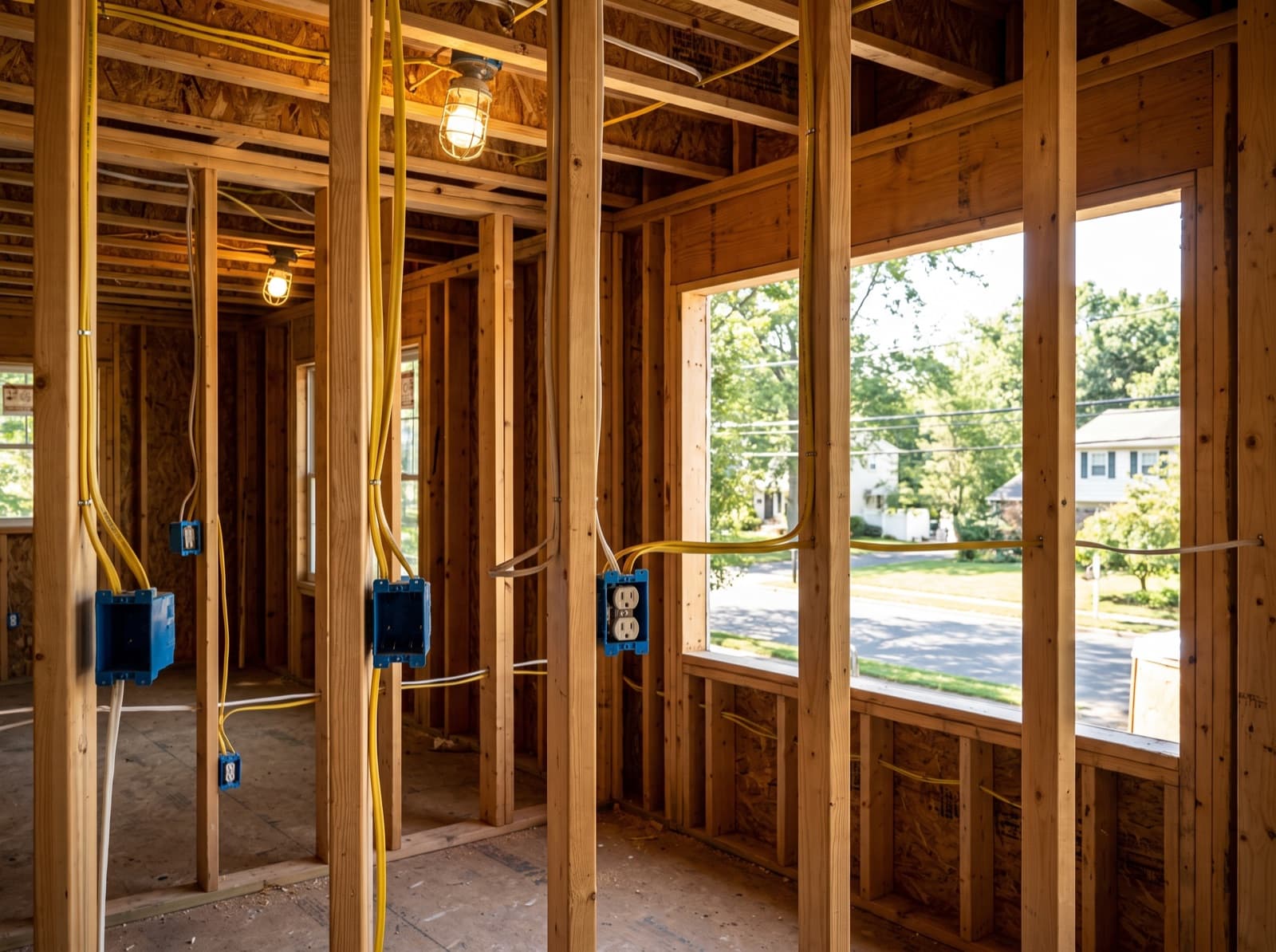
- Rough in and finish, for additions, gut jobs and new builds
- Free estimate, price agreed before work starts
- Licensed and insured, NJ #19320
Nothing gets covered until the town has inspected it.
The panel gets checked against what is being added
A new kitchen, an addition or a finished basement adds load to a service that was sized for the house as it was, so whether the panel carries it is worked out first, and if it does not, that is part of the price you are given rather than a surprise later.
The permit goes in before the work
In New Jersey both new construction and work on an existing building need a construction permit from your municipal construction office, with the electrical work as its own subcode on it. Inside the Pinelands, renovating a house that is already standing is exempt from applying to the Pinelands Commission, but new construction can need its approval first, and your construction office says which applies.
Rough wiring is inspected while the walls are open
On a one or two family house the state lists rough wiring, the panel and the service as a midpoint electrical inspection, and construction stops until it is done. Whoever applied for the permit tells the town the work is ready, and the inspection has to happen within three days of that notice.
The final inspection closes it out
Once the devices and fixtures are in, the final electrical inspection looks at the wiring, the devices and the fixtures. The job then closes with a Certificate of Occupancy, or a Certificate of Approval for permitted work that does not need one, and your construction office tells you which your job gets.
Before the walls close.
Every question here is one somebody actually asked on a forum or an inspection site, and each answer links to where it was asked.
Who pulls the permit, me or the electrician?
Either can. New Jersey's own guidance says the application is made by the owner or by an agent, and it names an electrical or other contractor employed on the work as an agent. Whoever applies, the permit belongs to the owner. The person who applied is also the one who tells the town the work is ready for inspection, so it is worth settling who that is before the job starts rather than when the walls are waiting to close.
The original question on RedditMy contractor only has a builder's license and quoted extra for the electrician. Is that normal?
That part is normal. Electrical work in somebody else's house in New Jersey is done by a licensed electrical contractor, so a general contractor without that license brings one in, and that line on the quote is the electrician's work. It is separate from the permit fee, which each town sets by its own ordinance. If the two are blended into one number, it is fair to ask for them apart.
The original question on RedditWhen does the rough electrical inspection happen?
Once the boxes and the cable runs are in and before anything covers them, so before the insulation and the drywall. On a one or two family house New Jersey lists rough wiring, the panel and the service as a midpoint electrical inspection, and construction stops until it is done. Whoever holds the permit tells the town the work is ready, and the town has three days from that notice to inspect.
The original thread on DIY ChatroomDo the outlets go in before or after the drywall?
Both, in two stages. The boxes and the wiring go in before the drywall, at rough in, so they can be inspected open. The outlets, switches and fixtures go on after the walls are finished, which is the finish stage, and the final electrical inspection looks at the wiring, the devices and the fixtures together.
The original thread on DIY Chatroom